Generating leads through Meta Ads is not just about reaching the right audience. The way you collect information from potential customers also affects campaign performance.
When running lead generation campaigns on Facebook and Instagram, businesses often choose between Meta Instant Forms and website landing pages. Both methods can generate leads, but they offer different user experiences and advantages.
So, which option is better for your business?
The answer depends on your campaign goals, the type of audience you want to reach, and how you plan to convert leads into customers.
What Are Meta Instant Forms?
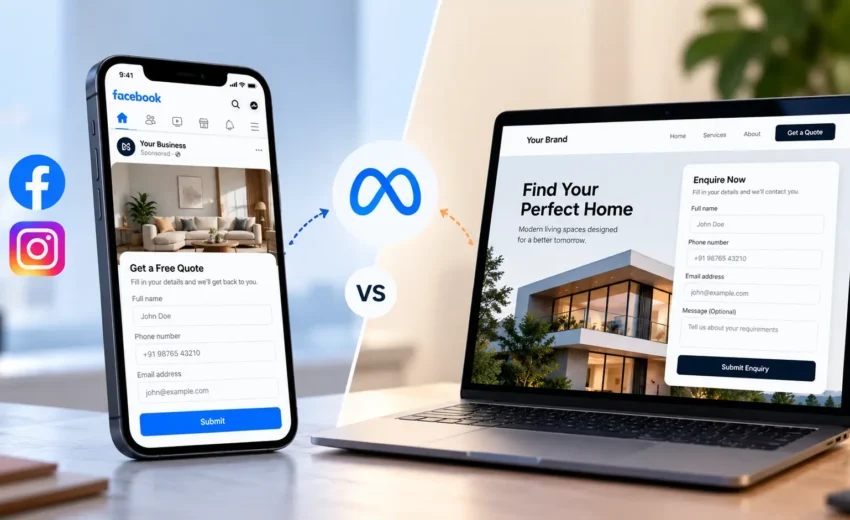
Meta Instant Forms allow people to submit their contact details directly within Facebook or Instagram without visiting an external website.
When someone clicks your ad, a form opens inside the platform. Depending on the form setup, some information, such as their name, email address, and phone number, may already be filled in using their profile details.
This makes the process convenient and reduces the number of steps required to submit an enquiry.
Meta Instant Forms are useful for:
- Businesses looking to generate leads quickly.
- Service providers collecting enquiries.
- Real estate businesses receiving property enquiries.
- Education and training institutes collecting course enquiries.
- Businesses that do not have a well-developed landing page.
You can also add custom questions to understand a person’s requirements before your sales team follows up.
What Are Landing Pages?
A landing page is a dedicated webpage designed to encourage visitors to take a specific action, such as submitting an enquiry, booking a consultation, or requesting a quotation.
When someone clicks your Meta ad, they are directed to your website, where they can learn more about your offer before submitting their information.
Unlike an Instant Form, a landing page gives you more control over how you present your business and guide visitors towards conversion.
Landing pages are useful for:
- Businesses offering high-value products or services.
- Companies that need to explain their services in detail.
- Campaigns that require visitors to compare options before enquiring.
- Businesses that want to track website behaviour and conversions.
- Lead generation campaigns where trust and detailed information are important.
A well-designed landing page can include service details, customer testimonials, pricing information, frequently asked questions, and a clear call to action.
Meta Instant Forms vs Landing Pages: Key Differences
Although both methods aim to generate leads, they differ in how people interact with your ads.
Factor | Meta Instant Forms | Landing Pages |
User experience | Form opens inside Facebook or Instagram | Visitor opens an external webpage |
Form completion | Often quicker because some details may be prefilled | Requires visitors to complete the website form |
Setup | Can be launched without building a separate landing page | Requires a dedicated webpage and form |
Information | Custom questions can qualify leads | More space to explain the offer and qualify leads |
Tracking | Meta lead reporting and available integrations | Website tracking through tools such as Meta Pixel and Conversions API |
Lead quality | Depends on form design and follow-up | Depends on page quality, offer, and lead qualification |
Best suited for | Convenient enquiry collection | Detailed offers and more informed enquiries |
Neither method guarantees better results. Performance depends on your audience, offer, campaign setup, and lead follow-up process.
Which Option Generates Better-Quality Leads?
One of the biggest concerns in lead generation is lead quality.
A campaign may generate many enquiries but still produce few actual customers. This can happen when people submit their information without having a genuine interest in the offer.
Meta Instant Forms make submitting an enquiry convenient. However, if the form asks for very little information, some leads may have limited purchase intent.
Landing pages allow businesses to provide more information before asking visitors to submit their details. This can help people understand the offer and decide whether it meets their needs.
However, a landing page does not automatically produce better-quality leads. A confusing webpage, slow loading speed, or unclear offer can also reduce conversions.
To improve lead quality with either method, consider:
- Asking relevant qualifying questions.
- Clearly explaining the product or service.
- Setting expectations about pricing or the next step where appropriate.
- Following up with leads promptly.
- Measuring how many leads become qualified prospects and customers.
The important point is to measure lead quality, not just the number of form submissions.
Cost Per Lead: Which Is More Affordable?
Businesses often compare these two methods using cost per lead (CPL).
Meta Instant Forms may generate leads at a lower cost because users can submit their details without leaving the platform. The shorter process can reduce friction.
Landing pages may have a higher cost per lead because visitors need to load a website and complete another step. However, they can provide more information and support a more detailed qualification process.
A lower CPL does not always mean better campaign performance.
For example, one campaign may generate many inexpensive leads, while another produces fewer leads that are more likely to become paying customers.
To understand which approach is more profitable, compare:
- Cost per lead.
- Percentage of qualified leads.
- Cost per qualified lead.
- Number of leads converted into customers.
- Revenue generated from those customers.
These metrics provide a clearer picture of how well your campaign performs.
How to Improve Meta Instant Form Performance
If you choose Instant Forms, focus on making the form convenient while collecting enough information to qualify potential customers.
- Choose the right form type
Meta provides different form experiences, with options varying by campaign setup. A higher-intent form can add a review step before submission, helping users confirm their information.
- Ask relevant questions
Collect only the information you need. For example, a service business might ask about the service required, location, or estimated budget when relevant.
Avoid adding unnecessary questions that make the form difficult to complete.
- Make the offer clear
Your ad should explain what the person will receive after submitting the form. This helps set expectations before the enquiry.
- Follow up quickly
A lead is more useful when your sales team contacts the person while their enquiry is still fresh. Use a reliable process to assign leads and track follow-ups.
How to Improve Landing Page Performance
If you use a landing page, the experience after the ad click should be clear, relevant, and easy to complete.
- Match the page to the ad
The headline and offer on your landing page should match the message in your Meta ad. Visitors should immediately understand that they have reached the right place.
- Keep the page focused
Give visitors the information they need to make a decision without distracting them with unrelated content.
- Make the page mobile-friendly
Many people click Facebook and Instagram ads on mobile devices. Use readable text, clear buttons, and a form that is easy to complete on a smaller screen.
- Improve loading speed
A slow page can cause visitors to leave before they see your offer. Check loading performance and avoid unnecessary elements that delay the page.
- Track conversions accurately
Set up appropriate tracking using Meta Pixel and, where suitable, Conversions API. Test that important actions, such as successful form submissions, are recorded correctly.
How to Choose the Right Option for Your Business
Your choice should depend on what you are selling, how much information people need, and what happens after they enquire.
Choose Meta Instant Forms when you want a convenient way to collect enquiries, need to launch quickly, or want to test demand without building a dedicated landing page.
Choose landing pages when your offer requires more explanation, visitors need supporting information before enquiring, or you need a tailored website experience.
You can also test both approaches. Run comparable campaigns with a similar audience, offer, and budget, then compare qualified leads and customer acquisition costs.
Make sure the comparison accounts for differences in tracking and lead follow-up. Do not choose a winner based only on the number of submissions.
Final Thoughts
Meta Instant Forms and landing pages can both support successful lead generation campaigns. The right choice depends on your business goals, the complexity of your offer, and the quality of leads you need.
Instant Forms offer a convenient way to collect enquiries within Facebook and Instagram. Landing pages give you more space to explain your offer and guide visitors through a dedicated conversion experience.
Instead of focusing only on which method generates more leads, measure which one brings in more qualified prospects and customers at a sustainable cost.
The best lead generation strategy is the one that turns advertising spend into meaningful business results.

Alfik P S
hi
October 16, 2026