You want backlinks. But asking people to link to you rarely works.
There is a better way. It is called broken link building.
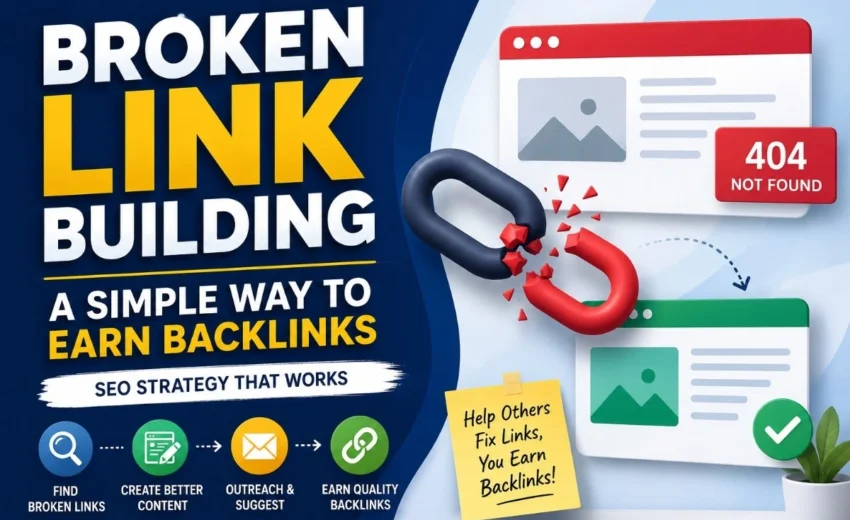
It sounds technical, but the idea is very simple. You find dead links on other websites. Then you suggest your own content as a replacement.
The website owner fixes a broken link. You earn a backlink. Both sides win.
This guide explains how broken link building works, why it is effective, and how to use it to earn natural backlinks.
What Is Broken Link Building?
A broken link is a link that leads nowhere. Maybe the page was deleted. Maybe the website is closed. When someone clicks it, they see a 404 error.
Broken link building has three steps:
- Find a broken link on someone else’s website.
- Create or find useful content on your site that matches the topic.
- Contact the website owner and politely suggest your link as a replacement.
That is all. No tricks. No spam.
For example, suppose a travel blog links to a guide about houseboat routes in Kerala, but that guide is gone. You have a similar guide on your site. You email the blog owner, explain that the link is dead, and offer your guide instead.
If they agree, you get a backlink. They get a happier reader.
Why Broken Link Building Still Works
Google still cares about backlinks. But not any backlink. Google wants links that are natural and useful.
Broken link building fits perfectly. You are not buying links or begging for favors. You are helping someone fix a problem on their website.
Most website owners appreciate that. They don’t want broken links on their site. It looks bad and frustrates visitors.
So when you offer a solution, they are more likely to say yes.
A Simple Real Example
Here is how one small campaign worked. Someone found a deleted resource page about Kerala backwaters. That dead page still had backlinks from several travel blogs. They created a better, updated guide on their own site. Then they sent short, polite emails to those blog owners.
Out of 40 emails, they got backlinks from 6 websites. That may not sound like much, but those were relevant, high‑quality links. Over time, their search traffic improved.
You don’t need hundreds of backlinks. A few good ones can make a difference.
Tools You Can Use
You do not need expensive software to start. But a couple of tools make the job easier.
- Ahrefs or Semrush – These help you find broken links on competitor websites. They have free trials or cheaper plans for beginners.
- Screaming Frog – A free tool (up to 500 pages) that crawls websites and finds broken links.
- Google Search Console – Free. It shows broken links on your own site, which you can fix first.
If you have no budget, you can still find broken links manually. Search Google for “best resources + your topic” and check each link one by one. It takes time, but it works.
How to Find Broken Link Opportunities
Here are three simple methods.
Method 1: Check competitor dead pages.
Use Ahrefs or Semrush to look at a competitor’s website. Find pages that return a 404 error but still have backlinks. Those are gold. You can create something better on the same topic.
Method 2: Search for resource pages.
Use Google searches like “helpful resources” + “your topic” or inurl: resources + topic. Visit those pages and check if any external links are broken.
Method 3: Look at Wikipedia.
Wikipedia sometimes marks a citation as “dead link.” That shows you a topic where people need updated information. You can create that content and then reach out to sites that linked to the dead page.
Creating Content That Wins Replacements
Your replacement content must be good. Website owners will not swap a dead link for a low‑quality page.
Make sure your content:
- Covers the same topic thoroughly
- Is up to date (not three years old)
- It is easy to read and well organized
- Adds something new (a table, a map, recent data, a personal tip)
Do not just copy what was there before. Improve it.
How to Reach Out Without Being Annoying
Your email should be short, polite, and helpful. Do not sell anything. Do not use fancy language.
Here is a simple template you can use.
Subject: Broken link on your page
Body:
Hi [Name],
I was reading your [article/resource page] about [topic] and noticed one of the links is broken.
Broken link: [paste the dead URL]
We recently published an updated guide on the same subject:
[your link]
It might be a good replacement for your readers.
Thanks for the great content.
Best,
[Your Name]
That is it. No flattery. No pressure. Most people ignore cold emails, but this one gets replies because you are helping them.
Common Mistakes to Avoid
Sending the same email to everyone.
Personalize at least the name and the broken link.
Offering weak content.
If your page is thin or irrelevant, they will say no.
Ignoring relevance.
Do not try to replace a travel link with your SaaS product page. Match the topic closely.
Spamming.
Do not email the same website ten times. One polite follow‑up after a week is fine.
Focusing only on big websites.
Smaller, relevant sites are easier to get links from, and those links are still valuable.
Is Broken Link Building Worth Your Time?
Yes, if you are patient. It is not a quick win. Finding broken links, creating good content, and sending emails takes effort.
But the backlinks you earn are natural and permanent. They will not disappear after a Google update. They keep working for you.
For travel sites, local businesses, blogs, and SaaS companies, this strategy works well.
Final Thoughts
Broken link building is not complicated. Find dead links. Make good content. Ask nicely.
You do not need to be an SEO expert. You just need to help people fix problems on their websites.
Start small. Pick one topic you know well. Find one resource page with a broken link. Write a short email. You might be surprised how often people say yes.
Have you ever found a broken link on a website you visit often? Let us know in the comments.
Alfik P S
hi