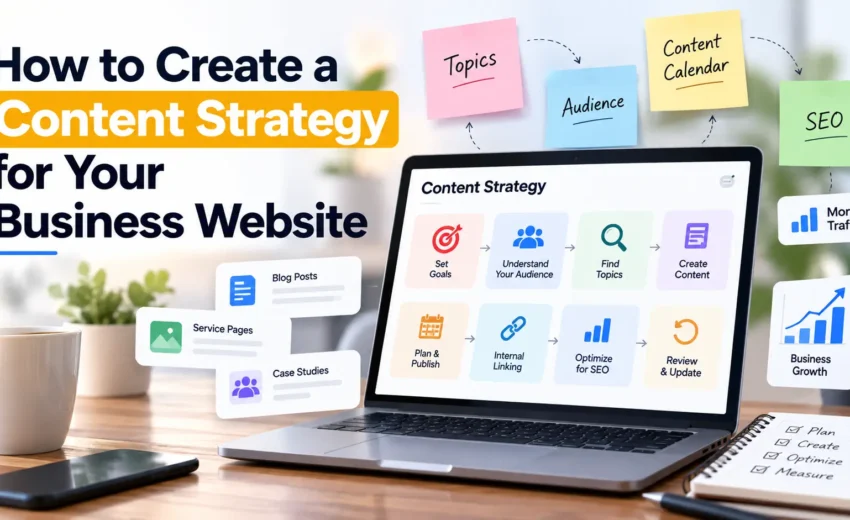
A business website needs more than a few service pages and occasional blog posts. If you want your website to attract the right audience, build trust, and support your marketing goals, you need a clear content strategy.
A good content strategy helps you decide what to publish, who you are creating it for, what purpose each piece of content serves, and how it connects with your overall business goals.
You don’t need to publish content every day. You need to publish the right content consistently.
What Is a Content Strategy?
A content strategy is a plan for creating, publishing, and managing content that supports your business goals.
For a website, this can include:
- Website pages
- Blog articles
- Product or service content
- Guides and resources
- Case studies
- FAQs
- Landing pages
The goal is not simply to create more content. Your content should help people find your business, understand what you offer, answer their questions, and eventually take action.
Why Does Your Business Website Need a Content Strategy?
Without a strategy, website content can become random.
You may publish several blog posts about different topics without knowing whether they are useful to your target audience or connected to your services.
A content strategy helps you:
- Attract the right audience
- Build topical relevance
- Support your SEO efforts
- Answer customer questions
- Build trust and credibility
- Support your products or services
- Generate relevant leads
- Make better use of your content over time
It also makes content creation more organized because you know what you are trying to achieve before creating each piece.
Step 1: Define Your Business Goals
Start with your business, not your blog.
Ask yourself what you want your website content to achieve.
For example, your main goal could be to:
- Generate leads
- Increase product sales
- Get more service enquiries
- Build brand awareness
- Increase organic search traffic
- Educate potential customers
Your content strategy should support these goals.
If your business wants more service enquiries, creating traffic-focused content alone may not be enough. You also need service pages, supporting content, and clear calls to action.
Step 2: Understand Your Target Audience
Before choosing topics, understand who you are creating content for.
Think about:
- Who are your potential customers?
- What problems do they have?
- What questions do they ask?
- What are they searching for?
- What information do they need before making a decision?
- What concerns could stop them from buying?
The better you understand your audience, the easier it becomes to create useful content.
Instead of asking, “What should we write about?”, ask:
“What does our potential customer need to know?”
That change in thinking can make your content much more useful.
Step 3: Find the Topics Your Audience Searches For
Once you understand your audience, start researching topics.
SEO tools such as Google Keyword Planner, Google Search Console, and SEMrush can help you discover keywords and search queries related to your business.
But don’t choose topics only because they have high search volume.
A topic should also be relevant to your business and useful to your target audience.
For example, a topic with lower search volume can still be valuable if the people searching for it are highly relevant potential customers.
Step 4: Create Different Types of Content
A strong website content strategy shouldn’t rely entirely on blog posts.
Your content can include different formats and purposes.
Informational Content
This answers questions and helps people learn.
Examples include:
- Guides
- How-to articles
- Tutorials
- FAQs
Commercial Content
This helps people understand your products or services.
Examples include:
- Service pages
- Product pages
- Comparison pages
- Solution pages
Trust-Building Content
This helps potential customers feel more confident about your business.
Examples include:
- Case studies
- Customer success stories
- Reviews
- Testimonials
- Company information
Different content types help your website support people at different stages of their decision-making process.
Step 5: Build Content Around Topics, Not Just Keywords
One common mistake is creating one article for every keyword variation.
Instead, think about the broader topic and the questions surrounding it.
For example, if your business provides digital marketing services, you could build content around topics such as SEO, Google Ads, Meta Ads, and content marketing.
You can then create useful supporting articles around those main topics.
This creates a stronger content structure and helps users discover related information on your website.
Step 6: Connect Your Content Through Internal Links
Creating good content is only part of the strategy.
Your pages should also be connected.
Use internal links to guide visitors from one relevant page to another.
For example, a blog article about SEO basics could link to a related service page or another useful SEO article.
Internal linking can help:
- Users discover related content
- Search engines understand your website structure
- Important pages receive more internal links
- Visitors spend more time exploring your website
The links should be natural and genuinely useful to the reader.
Step 7: Create a Content Calendar
A content calendar helps you organize what you are going to publish and when.
It doesn’t have to be complicated.
You can track:
- Topic
- Target keyword
- Content type
- Search intent
- Status
- Publishing date
- Target page
- Internal linking opportunities
The important thing is to have a system that your business can actually maintain.
Publishing two useful articles every month consistently can be better than publishing ten articles one month and nothing for the next six months.
Step 8: Optimize Content for Search and Users
SEO should be part of your content strategy, but content should not be written only for search engines.
Before publishing an article, review:
- Search intent
- Focus keyword
- Page title
- Meta description
- Headings
- Internal links
- Image optimization
- Readability
- Useful and original information
Most importantly, ask whether the content actually answers the user’s question.
A page can be technically optimized and still fail if it doesn’t satisfy the person who visits it.
Step 9: Create Content That Supports Your Important Pages
Your blog should not operate separately from the rest of your website.
Your content should support important business pages.
For example, if a service is important to your business, related informational articles can help users discover that service and understand why they may need it.
This creates a connection between informational content and business goals.
Your website should not simply generate traffic. It should help turn relevant traffic into meaningful actions.
Step 10: Review and Update Your Content
Content strategy doesn’t end when an article is published.
Some content becomes outdated, loses rankings, or stops attracting visitors over time.
Regularly review important pages and check:
- Is the information still accurate?
- Are there newer or better resources?
- Has search intent changed?
- Are there broken links?
- Can the content be expanded?
- Are there better internal linking opportunities?
- Is the page still generating useful traffic or conversions?
Updating existing useful content can sometimes be more valuable than constantly creating new articles.
How to Measure Your Content Strategy
Don’t measure your strategy only by the number of articles published.
Look at metrics that connect with your goals.
Depending on your objective, you can track:
- Organic traffic
- Search impressions
- Search clicks
- Keyword visibility
- Engagement
- Leads
- Enquiries
- Conversions
- Sales
Google Search Console can help you understand how your pages perform in Google Search, while Google Analytics can help you understand what visitors do after reaching your website.
The right metrics depend on what you are trying to achieve.
Common Content Strategy Mistakes
Some common mistakes can make a content strategy less effective:
Publishing Without a Clear Goal
Every piece of content should have a reason for existing.
Focusing Only on Search Volume
High-volume keywords are not always the best keywords for your business.
Creating Too Much Similar Content
Publishing multiple pages targeting almost the same topic can make your website unnecessarily complicated.
Ignoring Existing Content
Old content can contain valuable opportunities for updates and improvements.
Forgetting Internal Links
Even good content can remain disconnected if your website doesn’t link related pages together.
Measuring Only Traffic
Traffic is useful, but business results matter more.
Final Thoughts
A successful content strategy is not about publishing as much content as possible.
It is about understanding your audience, choosing relevant topics, creating useful content, connecting your pages, and measuring whether that content is helping your business.
Start with your business goals, understand what your audience needs, and build your website content around those needs.
Good content gets attention. A good content strategy turns that attention into business value.

October 8, 2026