

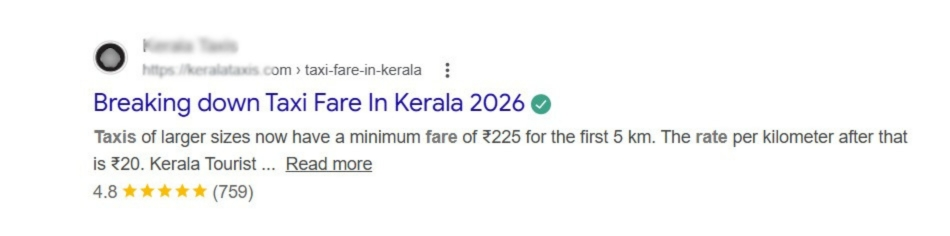
When you search on Google, you’ve probably noticed some results showing yellow star ratings along with the number of reviews. These are called review rich snippets, and they can significantly improve a website’s visibility and click-through rate (CTR).
For businesses and website owners, getting star ratings in search results can be a powerful way to build trust and attract more clicks. But many people assume that star ratings only appear if you manually add review schema to your page. In reality, Google can detect ratings in several different ways.
In this article, we’ll explore Google star ratings in search results, how websites get them, and how review widgets can sometimes generate them automatically.
What Are Star Ratings in Google Search Results?
Star ratings appear in Google when the search engine detects review or rating data associated with a page or entity. These ratings usually show:
- The average rating (for example, 4.8 ★)
- The number of reviews
- Sometimes additional information like product price or availability
These visual indicators are part of rich results, which are enhanced search listings designed to provide more useful information directly in the search results page.
For businesses, these ratings are extremely valuable because they increase credibility and visibility in search results.
Why Google Shows Star Ratings
Google displays star ratings when it detects structured review information connected to a page. This usually happens through structured data markup known as schema markup.
The most common types of schema that trigger star ratings include:
- Product schema
- Review schema
- AggregateRating schema
When a page contains this structured data, it tells Google things like:
- What item is being reviewed
- The average rating
- The number of reviews
- Who provided the reviews
Google can then display that rating directly in search results.
However, structured data is not always added manually. In many cases, review plugins or widgets automatically inject this information into the page.
How Websites Get Star Ratings in Google
There are several ways websites end up displaying star ratings in Google search results.
1. Adding Review Schema Manually
The traditional method is to add JSON-LD structured data to a page. This markup includes fields such as:
- rating Value
- review Count
- item Reviewed
When implemented correctly, Google can interpret this data and show review snippets in search results.
This method gives website owners complete control over the schema but requires technical implementation.
2. Using Review Widgets or Plugins
Many websites today use review widgets that display customer reviews collected from platforms like Google.
These widgets often do more than just display reviews visually. They can also:
- Inject structured data dynamically using JavaScript
- Add Product and AggregateRating schema automatically
- Update ratings as new reviews appear
Because Google is capable of rendering JavaScript, it can detect structured data that is added after the page loads.
This means that even if the raw HTML source does not contain review schema, Google may still detect it once the page is fully rendered.
3. Google Associating Ratings With an Entity
In some cases, Google associates a page with a known business entity. If the search engine can confidently connect the page with a business that has reviews, it may display ratings that originate from trusted review sources.
However, this usually happens only when Google has strong confidence in the entity relationship.
An Interesting Technical Case
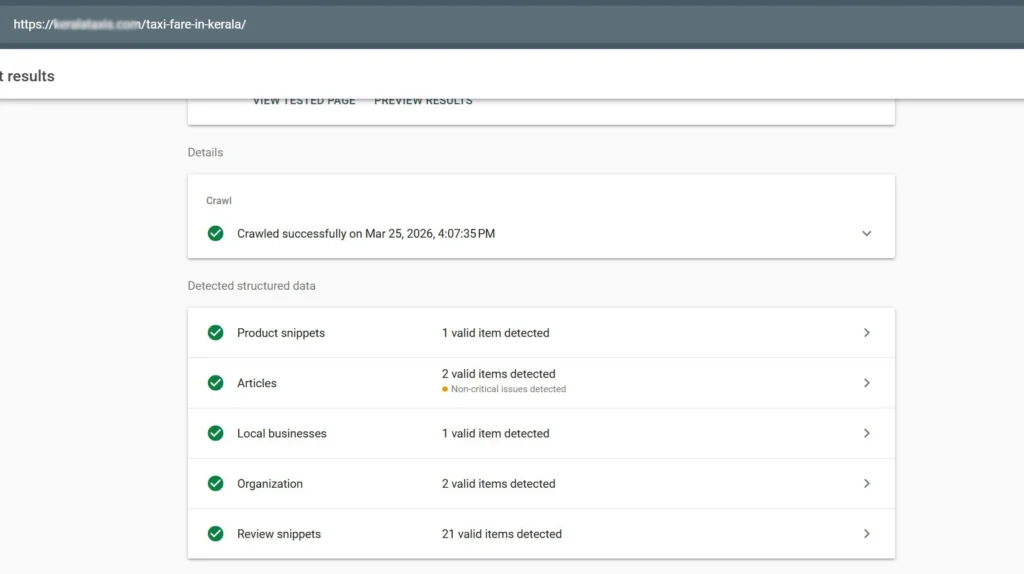
During a technical SEO audit, a page appeared in Google search results with star ratings and review counts, even though the raw page source only contained Article schema.
After further investigation, the reason became clear.
The website had a review widget installed on a separate feedback page, but the widget’s script was loaded across the entire website. When the page loaded, the script dynamically injected Product and AggregateRating structured data into the page.
Google’s Rich Results Test, which renders the page like Googlebot does, detected the injected schema and reported:
- Product schema
- Review schema
- Aggregate rating data
As a result, Google was able to display star ratings in the search results, even though they were not present in the raw HTML source.
This example highlights an important concept in modern SEO:
Google analyzes the rendered version of a page, not just the initial HTML.
Why Star Ratings Matter for SEO
Star ratings are more than just a visual enhancement. They can have a direct impact on search performance
1. Higher Click-Through Rate
Listings with star ratings tend to stand out in search results. Users naturally gravitate toward results that show social proof.
This can significantly improve CTR compared to standard search listings.
2. Increased Trust and Credibility
Seeing hundreds of reviews and a high rating signals that a business is trusted by customers. This can influence user decisions before they even visit the website.
3. Better Search Visibility
Rich snippets make your search result visually distinct, helping it stand out among competitors.
Even if your ranking position stays the same, a rich snippet can increase the likelihood of getting the click.
Important Guidelines From Google
While star ratings can improve visibility, Google has introduced rules around self-serving reviews.
For example, Google generally discourages:
- Adding review markup about your own business directly on your site
- Using schema that does not accurately represent visible content
To remain compliant, review data should:
- Reflect real reviews
- Be clearly visible to users on the page
- Accurately match the structured data
Using trusted review sources and transparent integrations helps ensure that your implementation follows Google’s guidelines
The Future of Rich Results and Reviews
Search engines are constantly evolving how they interpret structured data. As websites increasingly rely on JavaScript frameworks and dynamic content, Google continues to improve its ability to render and understand pages after they load.
This means that SEO is no longer limited to static HTML markup. Modern search optimization often involves understanding how:
- JavaScript rendering works
- Structured data is injected dynamically
- Review integrations that interact with search engines
Businesses that understand these technical aspects of SEO can gain an advantage in how their pages appear in search results.
Final Thoughts
Star ratings in Google search results can significantly enhance how a website appears to users. While many people assume they only appear through manually added schema markup, the reality is more complex.
Google can detect review information through:
- Structured data markup
- Dynamically injected schema from review widgets
- Entity associations with known businesses
Understanding how these mechanisms work can help website owners make better decisions about review integrations and structured data.
In today’s search environment, technical SEO and structured data play an important role in how content is interpreted and displayed by search engines. Businesses that leverage these tools effectively can improve their visibility, credibility, and overall search performance.

Alfik P S
hi
March 25, 2026